
TL;DR
30-second read- DeepX completed the tape-out for its DX-M2 processor, designed to run models up to 100 billion parameters at 5 watts.
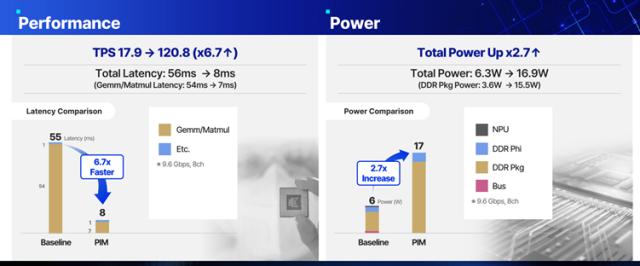
- Integrating Samsung processor-in-memory technology boosts token generation speeds up to 6.7 times compared to standard operation.
- Physical hardware module testing and software compiler completion will determine practical commercial adoption in robots and PCs.
- My take: “I am thrilled by this breakthrough from DeepX.” Read my full take
What happened
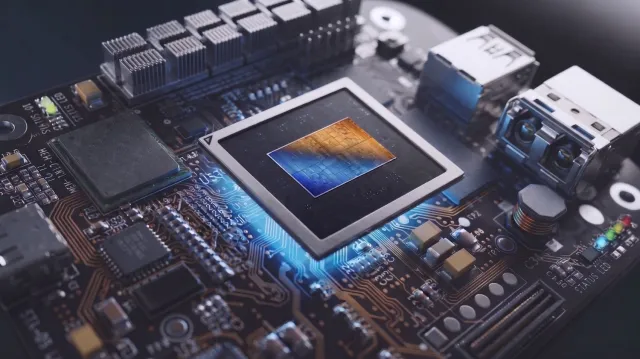
South Korean startup DeepX completed the tape-out of its DX-M2 edge AI accelerator. Built on a 2-nanometer process node, the chip delivers 80 TOPS and aims to operate within a 5-watt envelope. The processor targets models ranging from 20 billion to 100 billion parameters, generating between 10 and 30 tokens per second across mixture-of-experts architectures.
To overcome data transfer bottlenecks, DeepX partnered with Samsung Memory to use custom LPDDR5x processor-in-memory hardware. Company simulations indicate that moving matrix-vector multiplication directly into memory yields 6.7 times higher throughput for Llama3.1-8B. While peak PIM performance increases total power consumption by 2.7 times, DeepX expects a twofold speed increase within its baseline 5-watt limit.
DeepX is tailoring the DX-M2 for robotics, automotive systems, and AI laptops alongside Taiwanese manufacturers. The company created Newton, a robotics software library designed to replace Nvidia Isaac with equivalent API calls. DeepX is also working with Intel to connect OpenVINO into its software stack.
Why it matters
Modern generative AI usually relies on power-hungry data centers or high-wattage desktop GPUs, limiting local processing on mobile machines. Running models with tens of billions of parameters at single-digit wattages allows robots and drones to handle reasoning tasks without constant network connections.
The chip's design also highlights the commercial emergence of processor-in-memory technology. Computing inside memory chips resolves long-standing data bottlenecks, offering a practical alternative for hardware developers seeking higher efficiency before upcoming LPDDR6 standards arrive.
Local AI expands on battery devices
Devices like drones and handheld robots can run complex language models locally without relying on continuous cloud connectivity.
Lower barrier to leave Nvidia
Direct API compatibility allows developers to move code from Nvidia Isaac to DeepX Newton with minimal software changes.
- Tape-out
- The final stage of semiconductor design before manufacturing begins at a foundry.
- Processor-in-Memory (PIM)
- A computer architecture that performs calculations directly inside memory chips to reduce data transfer delays.
- Mixture of Experts (MoE)
- A neural network design where only selected sub-networks activate for each input token.
My take
I am thrilled by this breakthrough from DeepX.
Bringing 100-billion-parameter reasoning down to a 5-watt power envelope will finally give autonomous drones and field robots true independence from the cloud. Allowing these battery-powered machines to handle complex models locally without a continuous network connection is a huge leap forward for practical edge AI.
Aviv Hagag· Editor, Hey Future
Companies that may be affected


Not investment advice. Companies are listed for context only. Hey Future summarizes public reporting about technology; nothing here is a recommendation to buy, sell or hold any security.
Sources & credits
Every fact above comes from these sources.
Samsung logo: a trademark of Samsung, shown for identification only.
Intel logo: a trademark of Intel, shown for identification only.
Nvidia logo: a trademark of Nvidia, shown for identification only.
How this was written: AI-assisted summary, checked and edited by Aviv Hagag. “My take” was written by Aviv Hagag.
How we credit sourcesHey Future channel
Want the next stories straight to your phone?
New posts, with sources and the editor’s take.